By Cecilia Odey
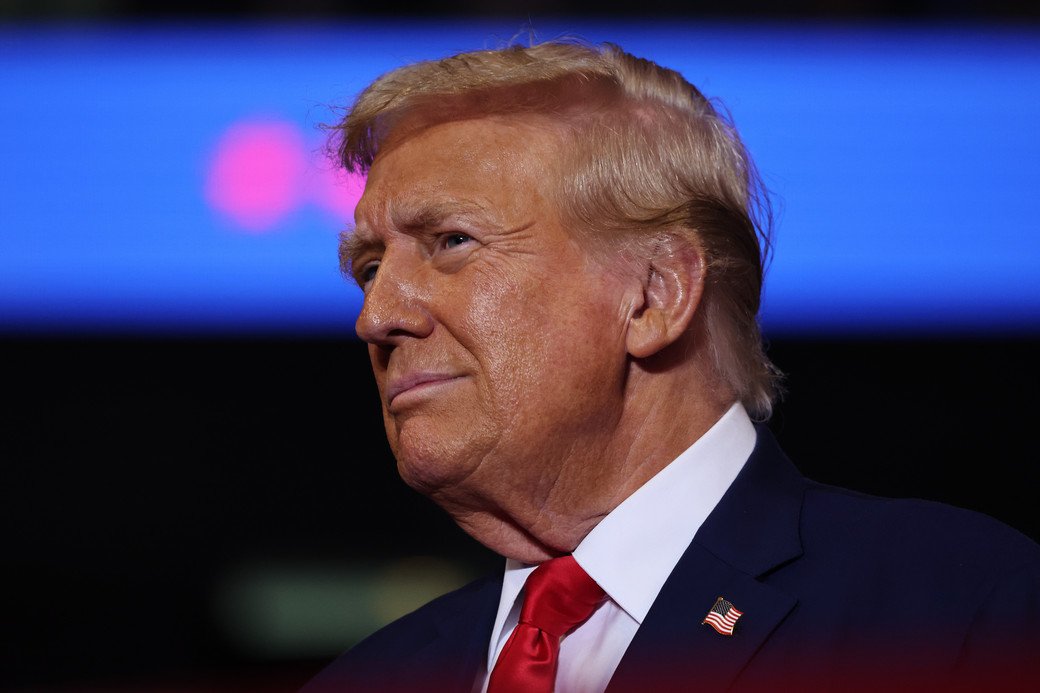
Canadian political and business leaders have pushed back strongly against U.S. President Donald Trump’s threat to delay the opening of the nearly completed Gordie Howe International Bridge.
This is according to Canadian media reports on Tuesday.
The bridge, which links Windsor, Ontario, with Detroit, Michigan, will become the third crossing at the Windsor-Detroit gateway.
The corridor accounts for roughly 25 per cent of total trade between Canada and the U.S. and is a key route for the North American automotive industry.
Windsor Mayor Drew Dilkens criticised Trump’s remarks, saying they disregard the shared economic interests of both countries.
“It’s just insane. When I read that post, I can’t believe what I’m reading,” Dilkens said.
“It’s just another speed bump that Donald Trump has put in the way of doing good things, not just for our country but for his as well.”
Responding to Trump’s claim that no American products were used in the bridge’s construction, Dilkens said U.S.-made steel was used on the American side of the project.
Business leaders also warned of the economic consequences of blocking the bridge’s opening.
Candace Laing, president and chief executive officer of the Canadian Chamber of Commerce, said such a move would be counterproductive.
“Whether this proves real or simply threatened to keep uncertainty high, blocking or barricading bridges is a self-defeating move.
“The path forward isn’t deconstructing established trade corridors; it’s actually building bridges,” Laing said in a statement.
The Gordie Howe International Bridge is primarily funded by the Canadian federal government, which has invested 6.4 billion Canadian dollars (about 4.7 billion U.S. dollars) in the project.
Canada plans to recoup the cost through future toll revenues, which are expected to be shared with the state of Michigan once the investment is fully recovered.
Earlier on Monday, Trump had complained on his social media platform that Canada has treated the U.S. “unfairly” in trade matters.
He argued that the U.S. should own `at least one half’ of the bridge and threatened to block its opening unless compensation is provided.
The comments mark a sharp departure from Trump’s position during his first term, when he described the bridge in 2017 as a “vital economic link between our two countries.” (Xinhua/NAN)