
Dangote Refinery’s landmark Initial Public Offering (IPO) is the largest public offering in Africa’s history with a target of N2.15 trillion (approximately $1.63 billion). Dubbed “the people’s IPO”, the offer is structured to maximize retail inclusion across Nigeria and the wider African continent.
The survival and eventual success of the Dangote Refinery required a vast network of actors, ranging from multiple presidential administrations and strategic regulatory interventions to commercial banks and the sheer industrial willpower of Aliko Dangote himself.
The success is shared across several phases and stakeholders:
A. GENERAL
1.Conception and Land Concessions (2013–2016)
- Aliko Dangote & Dangote Group: As the visionary and primary risk-taker, Dangote conceptualized the project in 2013, initially planning it for the Olokola Free Trade Zone across Ondo and Ogun states before regulatory and logistical bottlenecks forced a relocation.
- Lagos State Government: The project required massive political goodwill for land acquisition. When the Olokola plan stalled, the Lagos State Government under Governor Babatunde Fashola stepped in to secure and provide a subsidized massive 2,635 hectares of land within the Lekki Free Zone, which became the operational bedrock for the project.
2.Construction, Financial Engineering & Political Backing (2016–2023)
- A Consortium of Local and Foreign Banks: Out of the estimated $19–$20 billion final cost, the project was heavily funded by commercial debt. A consortium of Nigerian commercial banks alongside international syndicates provided billions in loans.
- Godwin Emefiele & The CBN: Contribution of the Central Bank of Nigeria (CBN) under Godwin Emefiele was vital during this phase. The CBN provided roughly N125 billion in domestic currency loans through its intervention funds and prioritized foreign exchange (FX) allocation to the Dangote Group for importing heavy refining equipment amidst chronic national FX shortages.
- The Buhari Administration: Former President Muhammadu Buhari provided the broad political backing, executive support, and state apparatus necessary to protect the site’s development. Buhari also authorized the Nigerian National Petroleum Company (NNPC) Limited to acquire a 20% equity stake in the refinery for $2.76 billion in 2021 to secure state alignment. Buhari not only commissioned the project in May 2023 (even though the refinery did not and could not commence operation until much later) but also reaffirmed the directive for the NNPC equity stake to provide critical state validation and liquidity. Unfortunately, NNPC eventually took much less than the authorized 20% equity.
- The Indian Government: During a critical tech-transfer bottleneck where required technology clearances were delayed, former President Muhammadu Buhari directly intervened with the Prime Minister of India to secure fast-tracked approvals for engineering and technical deployments.
3.Wading Through Opposition, Sabotage, and Regulatory Battles (2023–2024)
- Industry and Bureaucratic Pushback: Upon completion, the refinery faced severe opposition from local and international oil trading syndicates as well as local regulatory bodies, such as the Nigerian Midstream and Downstream Petroleum Regulatory Authority (NMDPRA). Regulatory hurdles initially delayed licenses and false claims were leveled regarding the quality of Dangote’s refined products.
4.Commencement of Operations & The “Naira-for-Crude” Framework (2024–Present)
- President Bola Tinubu’s Administration: Despite early regulatory friction with midstream and downstream authorities (NMDPRA) over monopoly concerns and fuel import licenses, the Tinubu administration ultimately brokered the breakthrough “Naira-for-Crude” initiative. While Emefiele originally discussed the conceptual idea of selling products in naira back in 2021, it was President Bola Tinubu’s administration that legally designed, approved, and enacted the official Naira-for-Crude policy. This framework directed the NNPC to supply crude to Dangote Refinery and any other functioning local refinery in Naira, removing the heavy burden of sourcing US dollars for feedstock thereby enabling sale of refined petrol to citizens in Naira, bypassing intense foreign exchange pressures.
5.Transition to the IPO & Continued Political/Policy Backing
- The Securities and Exchange Commission (SEC) & The Nigerian Stock Exchange:
The transition of the mega-refinery into a public entity is being managed by Nigeria’s capital market regulators, culminating in the SEC’s approval of its monumental Initial Public Offering (IPO). This step transitions the project from a private/state-backed “single-owner” entity into a publicly traded asset owned by everyday shareholders. Its long-term financial sustainability will rest to an extent on the capital markets and institutional investors while government interventions and a favourable, reform-oriented policy environment remain crucial.
B. THE TINUBU FACTOR
President Bola Tinubu’s individual footprint on the Dangote Refinery is distinct because it spans two entirely different eras of his political life. It bridges his foundational role as Governor of Lagos State (1999–2007) with his current executive interventions as President of the Federal Republic of Nigeria. Aliko Dangote explicitly acknowledged this legacy, stating that the refinery is, “in many ways, (Tinubu’s) brainchild.”
Furthermore, the President’s aggressive restructuring of the Nigerian National Petroleum Company (NNPC) Limited and his enforcement of full deregulation served as the operational “oxygen” that kick-started and stabilized the Dangote Refinery.
While the refinery was (and is) a technological marvel, it was functionally suffocated by old institutional networks, import-reliant cartels, and an artificial subsidy regime. Tinubu systematically dismantled these barriers, creating the exact economic environment required for a private mega-refinery to thrive.
1.The Lagos Gubernatorial Era: Laying the Spatial Foundation (2002–2006)
Long before the refinery was conceptualized, Tinubu designed the physical and legal economic zone that would eventually host it.
- Conception of the Lekki Free Trade Zone (LFTZ): In the early 2000s, Tinubu’s administration envisioned transforming the swampy peninsula of Lekki into an industrial, tax-free powerhouse. He initiated the master plan and established the Lekki Free Zone in partnership with Chinese consortiums and local stakeholders.
- The Regulatory Blueprint: Tinubu instituted the local tax holidays, tariff exemptions, and free-zone legislation under Lagos State law. This institutional framework is exactly what made the land uniquely attractive to heavy industries decades later. Without his early push to turn Lekki into an autonomous economic oasis, the geographic destination for the refinery would not have existed when Dangote’s initial Olokola plans fell through.
2.The Pre-Presidency / Intermediary Era: Behind-the-Scenes Lobbying
- Political Intermediary for Private Capital: During the long construction delay years under the Buhari administration, Tinubu acted as a critical bridge between corporate Nigeria and the state. He heavily lobbied former President Muhammadu Buhari to lean into private-sector infrastructure delivery, ensuring that regulatory roadblocks at the federal level were considerably mitigated before he ever took the oath of office himself.
3.The Presidential Era: Breaking the Supply and Regulatory Gridlock (2024–Present)
When Tinubu assumed the presidency, the refinery was physically complete but functionally inactivated by regulatory pushback, strong resistance by local importers, undercutting by international oil companies IOCs), and severe FX shortages. Tinubu intervened with significant executive actions:
- The “Naira-for-Crude” Directive: In July 2024, as Dangote faced an existential crisis over a lack of US dollars to purchase feedstock, President Tinubu directly ordered the NNPCL to supply 450,000 barrels of domestic crude daily to local refineries—with Dangote as the pilot—denominated strictly in Naira. As earlier indicated, this single policy shielded the refinery from global FX shocks and secured its operational survival.
- Neutralizing the “Malta Crude” and Regulatory War: When midstream regulatory agencies publicly accused Dangote of trying to foster a monopoly and claiming his diesel was inferior, Tinubu stepped in as a referee. He quieted the internal political sabotage, directing state agencies to align with local refining goals.
- Securing Logistic Corridors: Recognizing that a 650,000 bpd refinery would choke Lagos roads, Tinubu flagged off massive infrastructure projects. He personally commissioned the concrete deep-sea port access roads and the 7th Axial Road, which directly links the Dangote Refinery to the Sagamu-Benin Expressway, guaranteeing evacuation routes for refined products.
4.Removing the Old Guard: The 2025 NNPC Board Reset
For the first two years of the refinery’s rollout, it faced subtle and overt resistance from state actors accustomed to the old oil-bureaucracy. High-stakes regulatory disputes erupted over crude supply deficits and product quality standards.
- The De-bureaucratisation Purge (April 2025): Recognizing that internal sabotage from within the state oil firm was threatening national energy security, President Tinubu executed a total clean-out on April 2, 2025. Under Section 59 of the Petroleum Industry Act (PIA), he completely reconstituted the NNPC board.
- Replacing Insiders with Private Sector Allies: He removed long-standing Group CEO Mele Kyari (who was due to retire anyway) and Chairman Pius Akinyelure, installing Engineer Bashir Bayo Ojulari (a private-sector veteran from Shell) and Ahmadu Musa Kida respectively.
- The Strategic Shift: This new leadership completely changed the NNPC’s attitude toward the Dangote Refinery. Instead of viewing Dangote as a hostile competitor, Ojulari’s commercially driven board adopted an attitude of corporate partnership, leading high-level delegations to the refinery to smoothen operational friction. This fostered institutional alignment and enhanced cooperation on feedstock.
5.Full Deregulation: Creating a Market for Private Refining
Under the old fuel subsidy regime, the government artificially set petrol prices and paid out trillions to import cartels to cover the difference. A private refinery like Dangote could not legally or profitably exist in that ecosystem because it would have been forced to sell fuel at a loss or rely on erratic state subsidy refunds.
- Eliminating the Import Monopoly: By standing firm on his “subsidy is gone” declaration, Tinubu forced the downstream sector into total deregulation.
- Ensuring Commercial Viability: Deregulation allowed the market to set realistic, cost-reflective prices. This gave the Dangote Refinery a transparent, commercially viable playing field where it could sell its product directly to local marketers based on actual refining costs rather than arbitrary political dictates. It helped neutralize artificially suppressed pricing and reliance on state refunds while enabling market-driven, profitable sale of refined petrol directly to local buyers.
6.Starving the Saboteurs: Policy Adjustments & Financial Discipline
Entrenched cartels and international fuel traders attempted to bypass the domestic refinery by importing cheap, off-spec, heavily blended European fuel into Nigeria to undercut Dangote’s higher-quality local production. Tinubu counter-attacked through sweeping structural policies:
- Executive Order No. 9 of 2026: Tinubu stripped the NNPC of its legendary financial autonomy by revoking its automatic right to retain a 30% management fee on state oil and gas profits. By forcing direct remittance of these trillions back into the Federation Account, he starved the old institutional networks of the liquidity used to fund parallel import schemes. This enforced financial transparency, ensuring state resources prioritize local refining.
- The “Naira-for-Crude” Breakthrough: When international oil companies (IOCs) impacted pricing structures to add predatory $3 to $4 premiums per barrel for local buyers, Tinubu stabilized the refinery’s supply chain. Through the Naira-for-Crude initiative as earlier stated, he forced the state’s domestic allocation (450,000 barrels per day) to be routed straight to local refiners in local currency, bypassing the foreign exchange starvation cartels used to try to halt the refinery’s daily operations.
7.The Path to the SEC-Approved IPO
As the Dangote Refinery seals its landmark IPO to raise trillions of Naira, the Tinubu administration’s “Nigeria First” economic policy serves as its biggest selling point to investors. By legally prioritizing local refining capacity over fuel imports, Tinubu’s macro-reforms effectively guaranteed a captive, protected domestic market for the refinery, making its stock highly lucrative ahead of Africa’s largest market listing.
CONCLUSION
As Aliko Dangote himself stated, the refinery’s ultimate operational stability is directly linked to the Tinubu-led Federal Government’s policy environment, which encourages local industrialization and self-sufficiency.
There are still challenges to address, especially the imperative to ultimately stop importation as we increase local refining capacity. This requires sustained strong political will to continuously confront vested interests!
Nonetheless, by deploying his presidential powers to reform the energy sector’s macroeconomics, President Tinubu has helped transform the Dangote Refinery from a vulnerable, stranded asset into Africa’s most dominant industrial powerhouse.
The vision and resilience of Aliko Dangote, combined with the contributions of various stakeholders over the years, have been effectively leveraged to unlock the refinery’s massive potential.
Driven by the IPO and the expected boost in refining capacity alongside continued government support with the right policy environment, the future looks bright not only for the Dangote Refinery but for the country as a whole.
God bless Nigeria!
ABOUT THE AUTHOR:
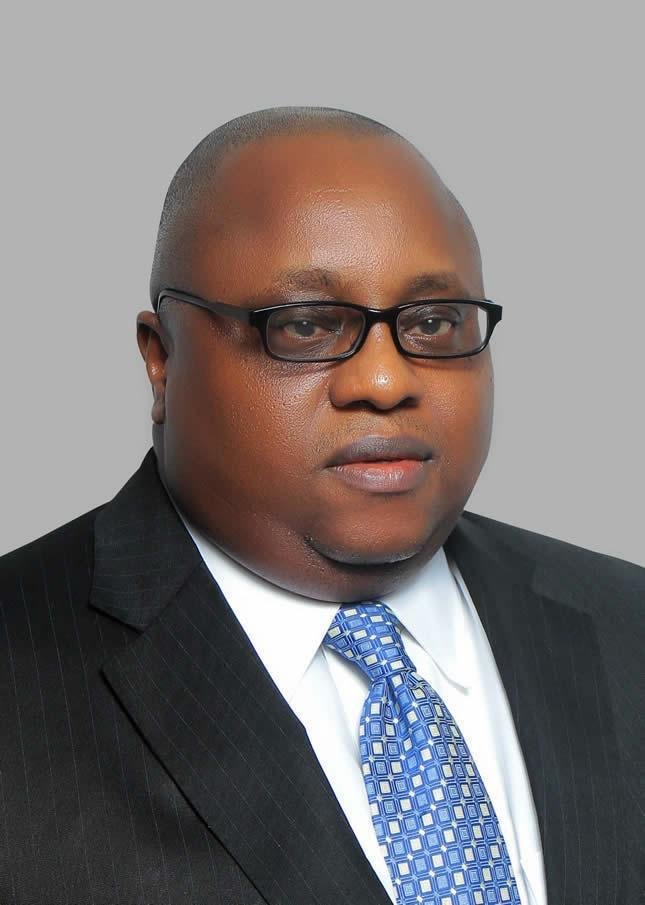
Bakare, a consultant and former bank chief executive, lives in Lagos.


