One of the privileges of journalism is that it teaches you to pay attention—not just to what people say, but to what they suddenly stop talking about. It teaches you that sometimes the biggest story is the one carefully buried beneath another.
As Nigeria inches towards another general election, I have noticed something rather familiar. We are once again sharpening our tribal identities. Once again, politicians are dusting off the old playbook: divide the people, inflame old suspicions, manufacture fresh grievances, and hope that ethnicity succeeds where performance has failed.
We have seen this movie before. We know how it ends. Yet every election season, we queue up for another showing.
Then came the news of the “last batch” of Nigerians voluntarily returning from South Africa.
Last batch?
How exactly did we determine that? Has someone conducted a census of every Nigerian abroad? Or did we conclude that the cameras had left?
More interestingly, some state governments quickly turned the returnees into political trophies. Welcome ceremonies. Photo opportunities. Speeches. Smiles.
But I couldn’t help asking a rather uncomfortable question: if governments had consistently created opportunities at home, how many of these young Nigerians would have left in the first place?
That is the conversation we zig-zagged away from.
The real celebration should not be receiving returnees. It should be built so that people never feel compelled to leave. It should be creating economies that attract talent instead of exporting it.
Instead, we clap for the symptom while ignoring the disease.
As we often say in Nigeria, “It’s not my portion.”
Can I get an amen?
—
Then there is Lagos.
The first time I arrived in Lagos in 2001, it was a culture shock. I had just left the calm surroundings of the University of Benin and UBTH quarters, where neatly trimmed lawns and flowers were part of everyday life.
Lagos was… different.
People casually stopped on the Third Mainland Bridge to throw bags of refuse into the lagoon. Oshodi was an experience best left undescribed.
Then something remarkable happened.
Across successive administrations —from Bola Ahmed Tinubu to Babatunde Fashola, Akinwunmi Ambode and now Babajide Sanwo-Olu—the city became cleaner, greener and more organised. Whatever one’s political persuasion, continuity in urban planning was evident.
Which is why my most recent visit saddened me.
The refuse heaps have returned.
One evening around the Ipaja axis, I watched sanitation workers labour tirelessly into the night. I silently applauded them.
By the following morning, on my way to the airport, fresh mountains of rubbish had appeared almost as if they had grown overnight.
That is not simply a government problem.
That is a citizenship problem.
What do you call a responsive government confronted by irresponsible citizens?
A zig-zag society.
The government clears the drains. Some citizens clog them again.
Government warns against indiscriminate dumping. Some people respond by treating every roadside as a landfill.
Then, when the rains arrive, we blame nature.
Floodwater, unfortunately, is not just water. It carries everything we recklessly throw away. Until Nigeria embraces modern waste management and cities like Lagos develop comprehensive sewage systems, we will continue wading through the consequences of our own behaviour.
Quite literally.
—
Speaking of heaps…
Those mountains of refuse reminded me of another mountain—the astonishing list of properties reportedly forfeited by former Attorney-General Abubakar Malami.
House after house.
Property after property.
By the time you finish reading the list, one Christian has shouted “Jesus!” while the Muslim neighbour has responded, “SubhanAllah!”
Then, when you thought the story could not get any more unbelievable, another forfeiture emerges. Former Central Bank Governor Godwin Emefiele has his own lengthy inventory.
At some point, one is forced to ask a simple question.
How much is enough?
What mathematical formula convinces a public officer that another mansion is still necessary?
Nigeria appears trapped in an endless relay race.
Some officials are forfeiting assets.
Others are allegedly acquiring new ones.
One group is surrendering yesterday’s loot while another is quietly preparing tomorrow’s.
The baton never seems to touch the ground.
—
We proudly describe ourselves as one of the most religious nations on earth.
Churches overflow.
Mosques overflow.
Prayer mountains are full.
Revival programmes multiply.
Yet our streets tell another story.
Our politics tells another story.
Our public conduct tells another story.
Religion should not merely make us louder in worship. It should make us better neighbours, more responsible citizens, more accountable leaders and more compassionate human beings.
Perhaps we should remember that cleanliness is not merely next to godliness.
It is evidence that godliness has actually arrived.
Ayi Kwei Armah wrote about the Chichidodo—the strange bird that hates excrement but survives by eating the maggots found in it.
For decades, I have wondered whether that bird was African politics itself.
We condemn corruption yet celebrate corrupt politicians.
We complain about dirty cities, yet throw refuse from moving vehicles.
We lament unemployment yet applaud governments for welcoming people who left because opportunities disappeared.
We denounce tribalism until election season arrives.
We hate the filth.
But somehow, we keep feeding on the maggots.
Armah asked whether The Beautiful Ones Are Not Yet Born.
Perhaps the more urgent question today is this:
Are we still pregnant with them?
Or have we mastered the politics of zig-zagging around every real problem while congratulating ourselves for standing still?
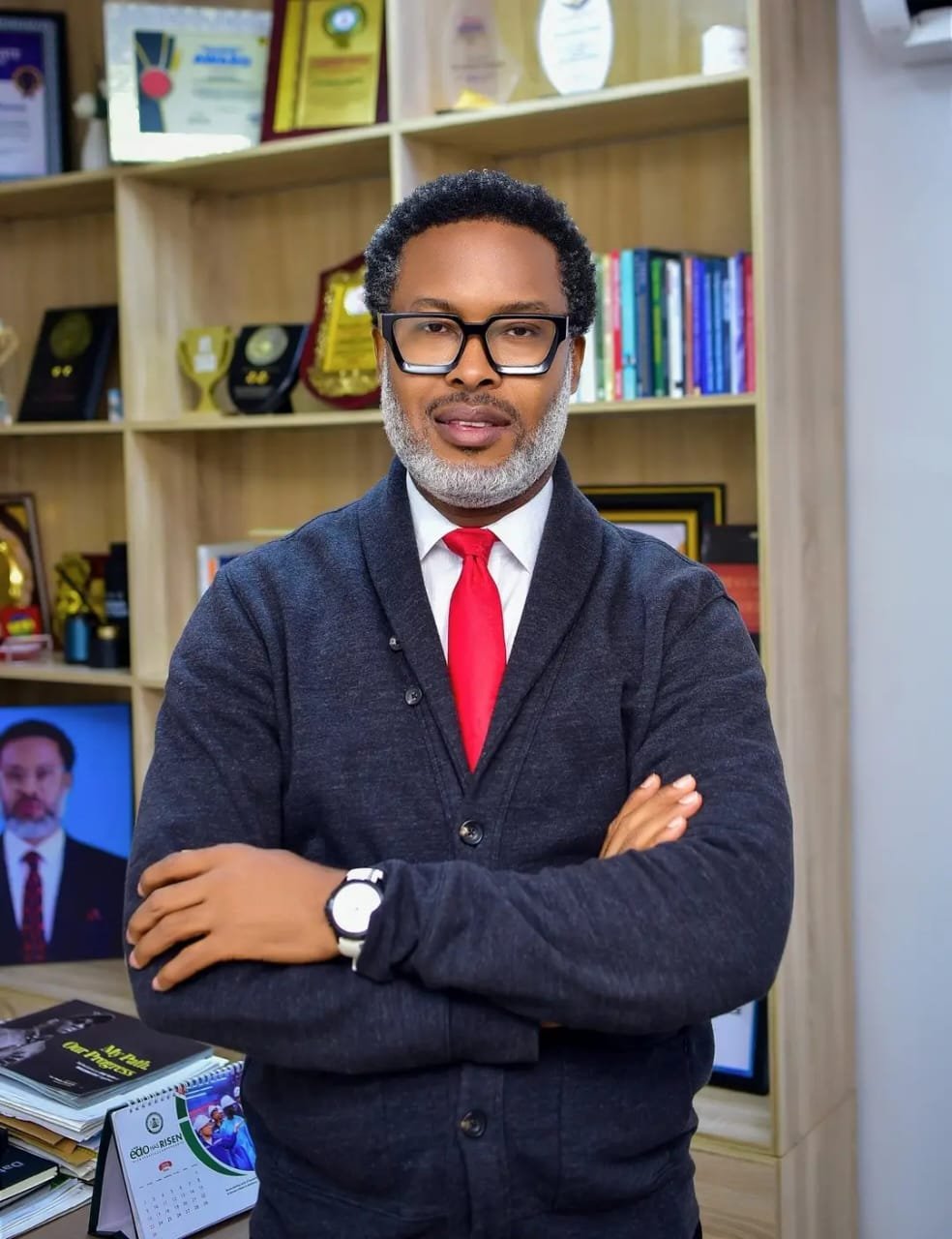
ABOUT THE AUTHOR:
Aledeh, a journalist, writes from Abuja